
The Quiet Revolution: Finding Zen and Purpose in the World of Cats
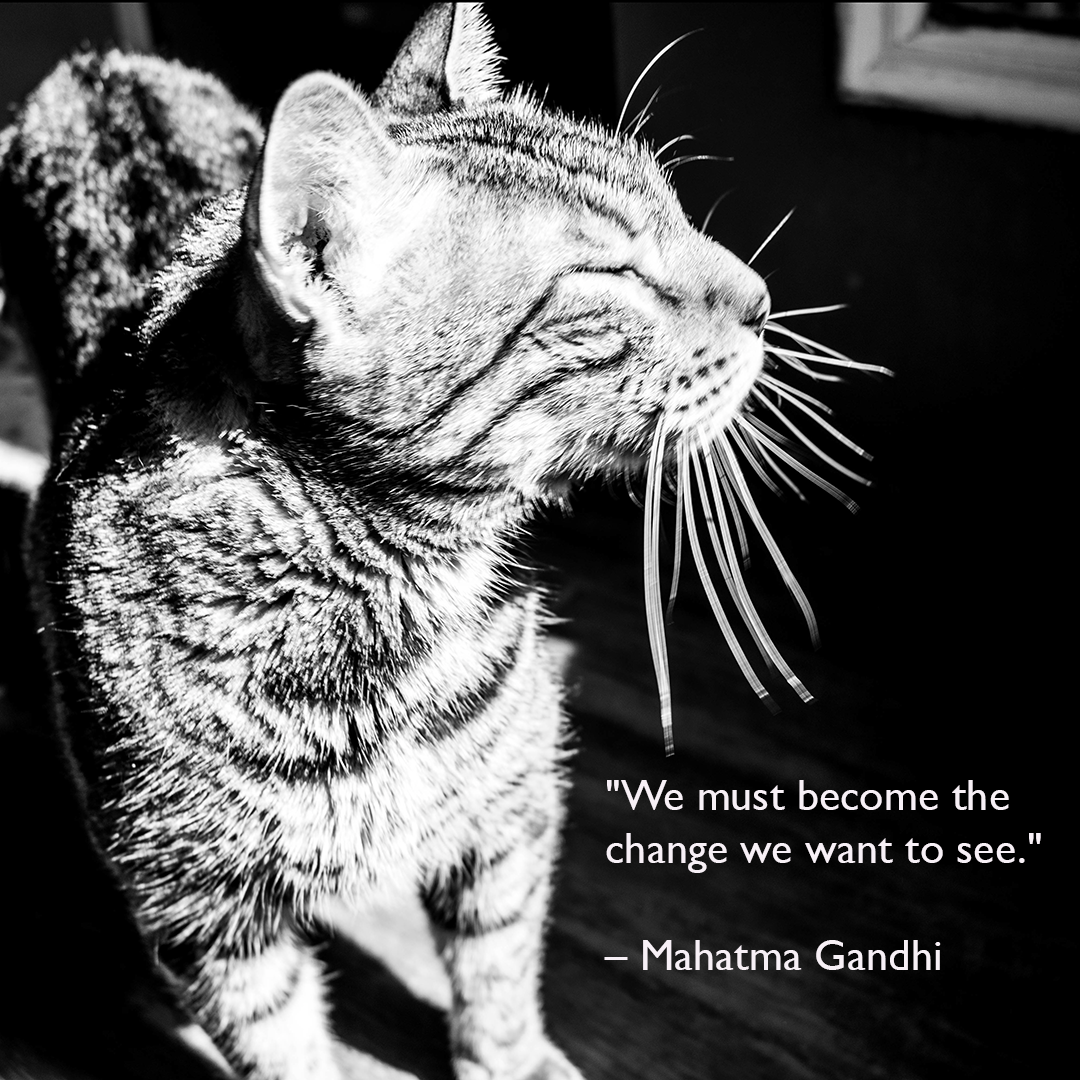
There is a specific kind of magic in a cat’s blink. It’s slow, deliberate, and carries the weight of a silent pact. In the image of a Bengal cat basking in a sharp beam of light—whiskers fanned out like silver needles and eyes squeezed shut in pure contentment—we see a living embodiment of the quote below it: “We must become the change we want to see.”
For the introverted soul, that change doesn’t usually look like a protest march or a loud proclamation. Instead, it looks like a quiet afternoon at a sanctuary, a steady hand offering a meal, and the patient, mindful presence required to earn the trust of a creature that has every reason to be afraid.
The Zen of the Small Scale: Rescuing Domestic Cats
Many people think making a difference requires a grand stage. But for the “Zen introvert,” the most profound impact happens in the micro-moments of domestic rescue.
When you care for rescued domestic cats, you aren’t just cleaning litter boxes or filling bowls; you are practicing a form of moving meditation. Cats are masters of the present moment. They don’t worry about yesterday’s hunger or tomorrow’s vet visit; they exist entirely within the warmth of the sun patch they’ve found.
Why Domestic Rescue is an Introvert’s Sanctuary:
- Parallel Play: You can be “with” a cat without the exhausting demands of small talk.
- Sensory Grounding: The rhythm of a purr or the texture of fur acts as a natural anchor for a wandering, anxious mind.
- Incremental Progress: Watching a terrified cat slowly transform into a lap-cat is a masterclass in patience and subtle influence.
By rescuing these animals, we “become the change” by providing the safety and gentleness we wish to see in the world. We create a pocket of peace where there was once only survival.
Walking with Giants: Volunteering at a Big Cat Sanctuary
If domestic rescue is about the subtle and the soft, volunteering at a big cat sanctuary is about awe and boundaries. There is nothing that brings you into the “now” faster than the low-frequency rumble of a lion’s roar or the piercing gaze of a leopard.
For an introvert, the appeal of the big cat sanctuary is the profound respect for personal space. These animals are not “pets”; they are sovereign beings. Working near them requires a high level of mindfulness. You must be hyper-aware of your body language, your energy, and your surroundings.
Lessons from the Big Cats:
- Presence is Power: You cannot be distracted when you are near a tiger. You learn to leave your phone, your ego, and your grocery list at the gate.
- Respecting the “No”: Big cats are the ultimate teachers of boundaries. Learning to read their cues—the flick of an ear or the twitch of a tail—refines your empathy in ways that translate to human interaction.
- The Ethics of Observation: There is a deep, quiet joy in knowing these animals are safe from the exotic pet trade or substandard zoos because of your labor, even if you never touch them.
The Introvert’s Impact: Change Without the Noise
The Mahatma Gandhi quote in the meme reminds us that transformation starts within. For those of us who find the world a bit too loud, the animal kingdom offers a different path to activism.
We don’t need to be the loudest voice in the room to be the most effective. Often, the most significant changes are made by the person who takes the time to sit quietly with a scared, newly adopted cat until it finally feels safe enough to sleep in their presence. That is the “change we want to see”—a world where the vulnerable are seen, respected, and cared for.
Final Thoughts: Finding Your Sunbeam
Whether you are scooping kibble for a tabby or cleaning the enclosure for a rescued tiger, you are participating in a quiet revolution of kindness. You are becoming the change.
The next time you feel overwhelmed by the noise of the world, find your version of that cat in the sunbeam. Close your eyes, take a breath, and remember that making a difference doesn’t have to be loud. It just has to be real.